






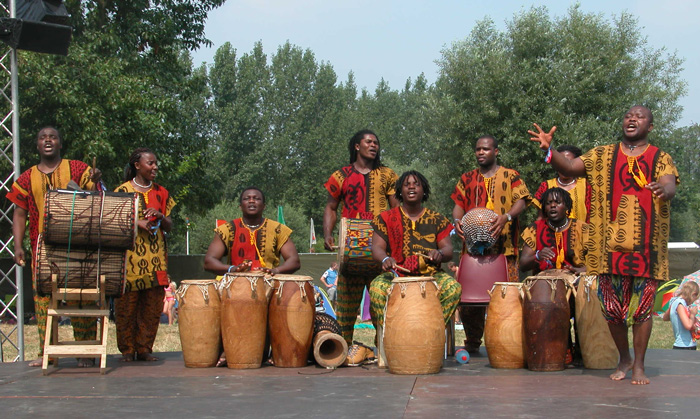

Music is at the core of Ghanaian culture. There’s music to celebrate the birth of a child and there’s music to mark the end of someones life. Ghanaian just love music! The kind of urban music that is widely listened by young people today has borrowed notes from Ghanaian traditional music. The style of traditional music in Ghana defers within the various geographical locations in the country. There are certain types of music, dance, drums and instruments that are synonymous to certain ethnic groups in the country. For instance, The Ga people have the Kpanlogo drum, the Ewe people have the Borborbor which is accompanied by it’s own dance. The Akans have the adowa and fontonfrum dance which are are accompanied by their own drums and instruments.

The traditional musicology of Ghana may be divided geographically between northern Ghana and the forested southern coastal areas. The northern musical traditions features a mix of melodic composition on stringed instruments such as the kologo flute and wind instruments such as flutes and horns, and voice; with polyrhythms clapped or played on the talking drum, gourd drums or brekete bass drums. There is a long history of either griot or praise-singing traditions.
The music of the coast is associated with social functions, and relies on complex rhythmic patterns played by drums and bells as well as harmonized song. Drums and dance are often linked, and the tradition of royal talking drums fontomfrom means music is widely used for communication. The most well known of southern Ghanaian drum traditions is the kete and adowa drum and bell ensembles. Whatever the case, music definitely pivotal to Ghanaian culture in every form.



Comments are closed.